
Quality & Verification
How We Test — Independent Purity Verification
Every research peptide Solira ships is verified by independent third-party laboratories before it leaves our fulfillment center. Each lot carries its own Certificate of Analysis (COA) documenting purity percentage, identity confirmation, and test methodology. This page documents that process in full — what's tested, how it's tested, and how researchers verify what they receive matches what's on the label.
- Independently HPLC-verified
- Lot-specific COA
- Third-party tested
- USA-fulfilled
Our Three-Method Verification Process
Solira does not self-certify purity. Every lot is independently tested using a three-method workflow before fulfillment.
-
1
High-Performance Liquid Chromatography (HPLC)
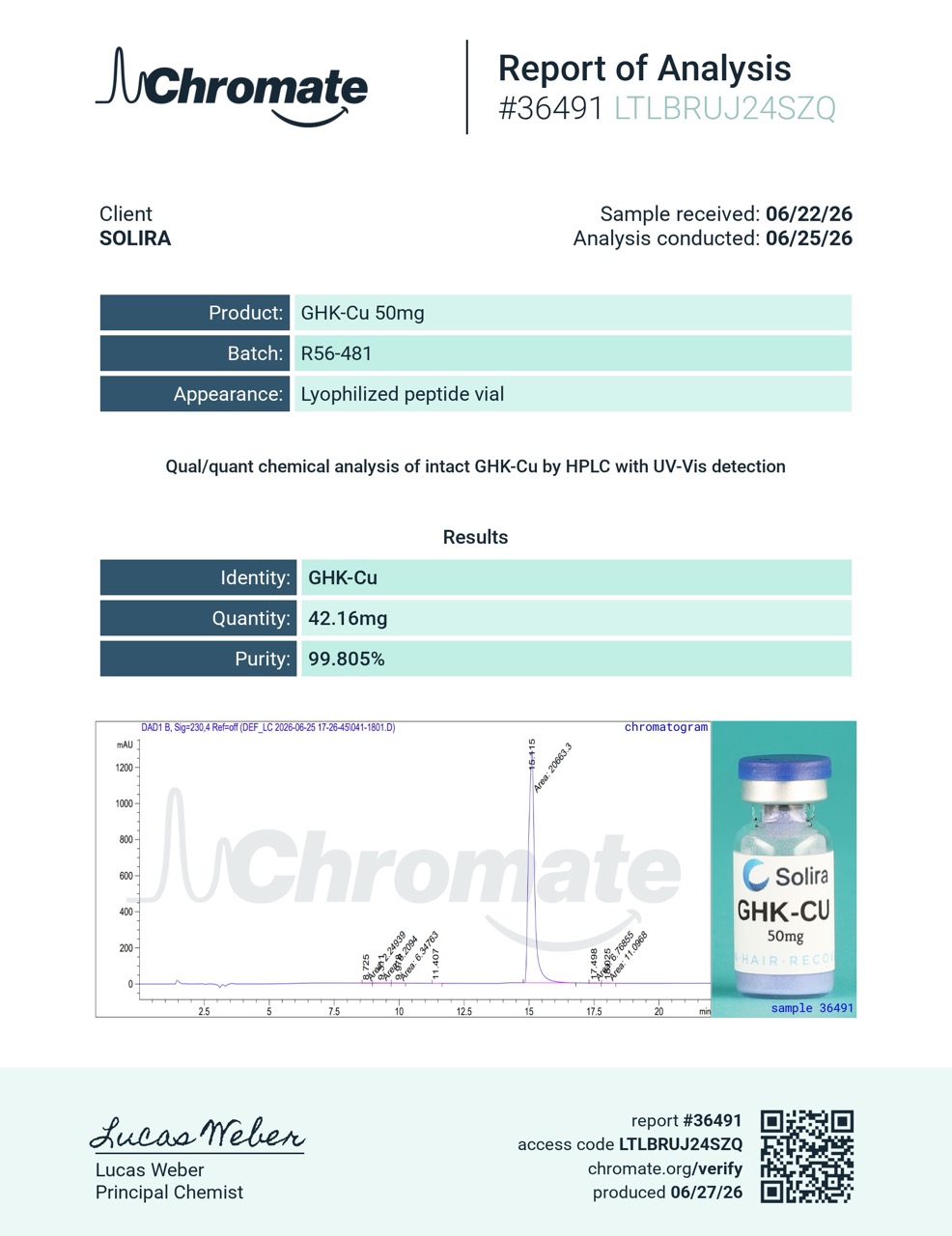
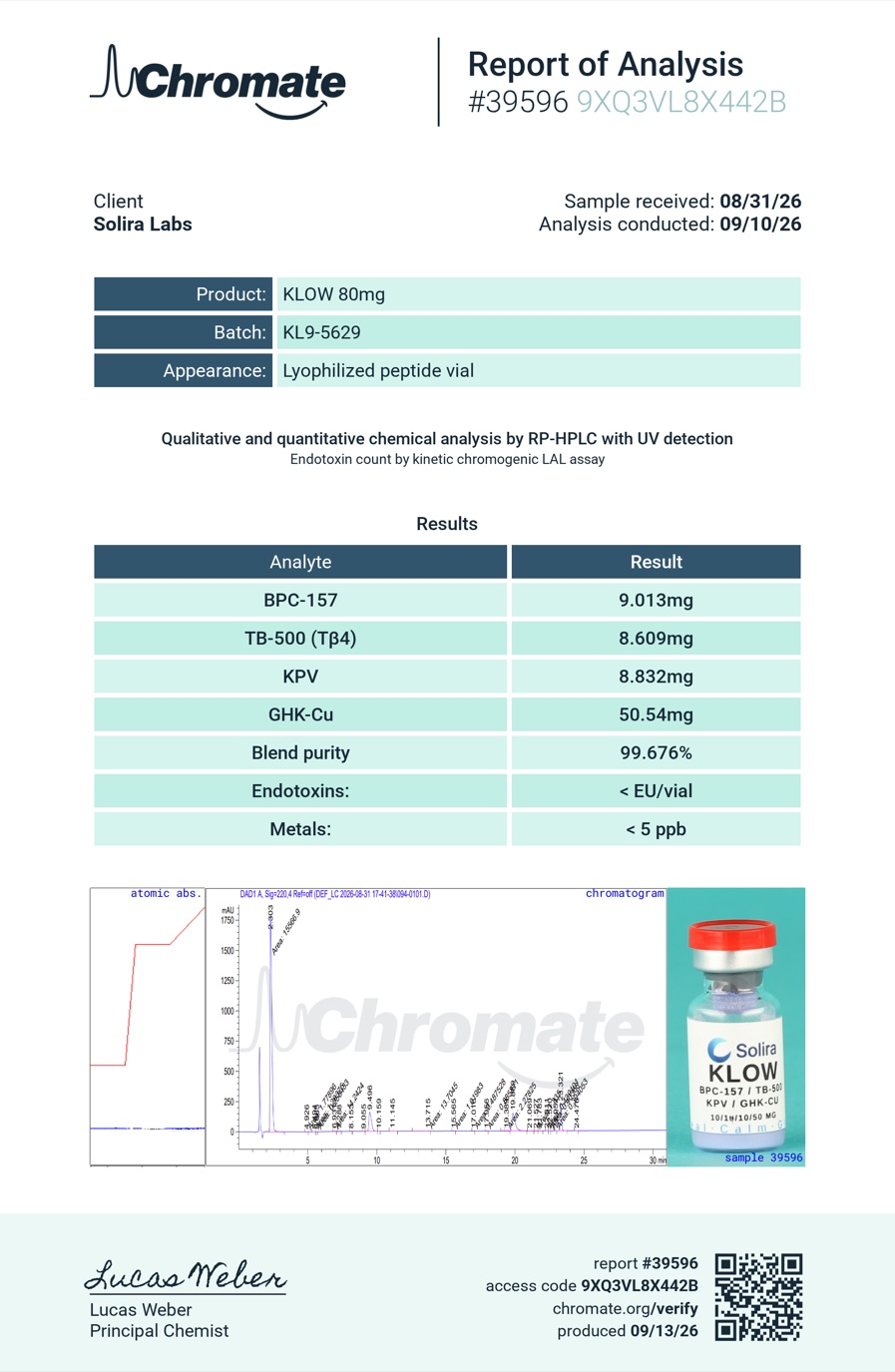
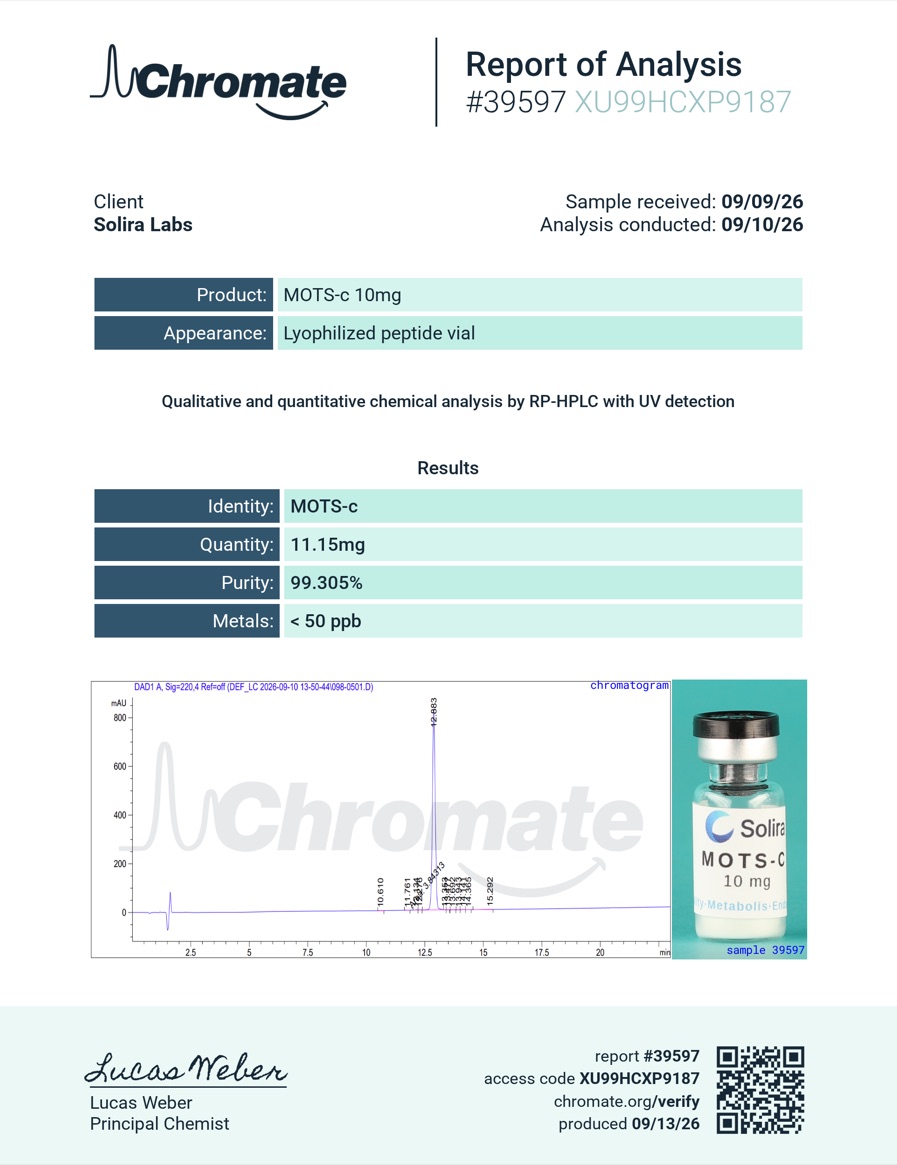
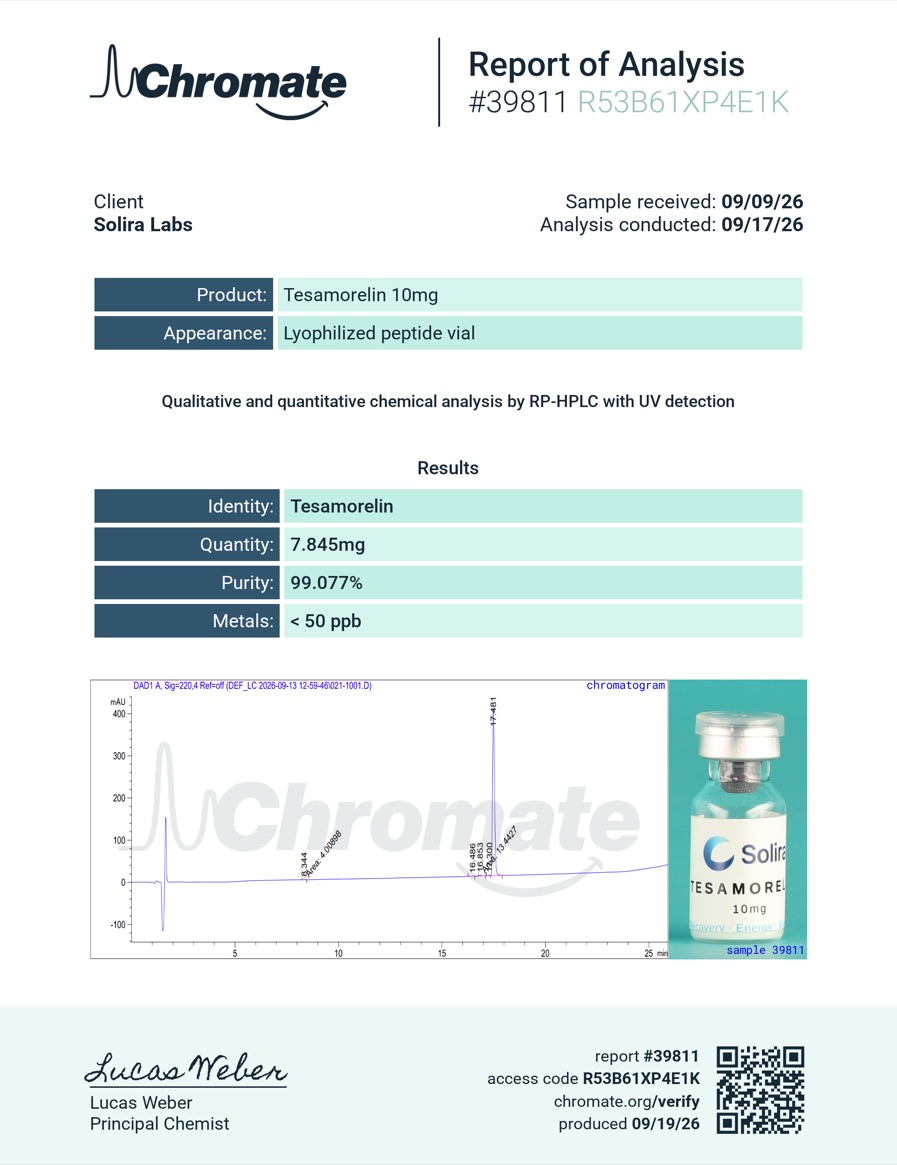
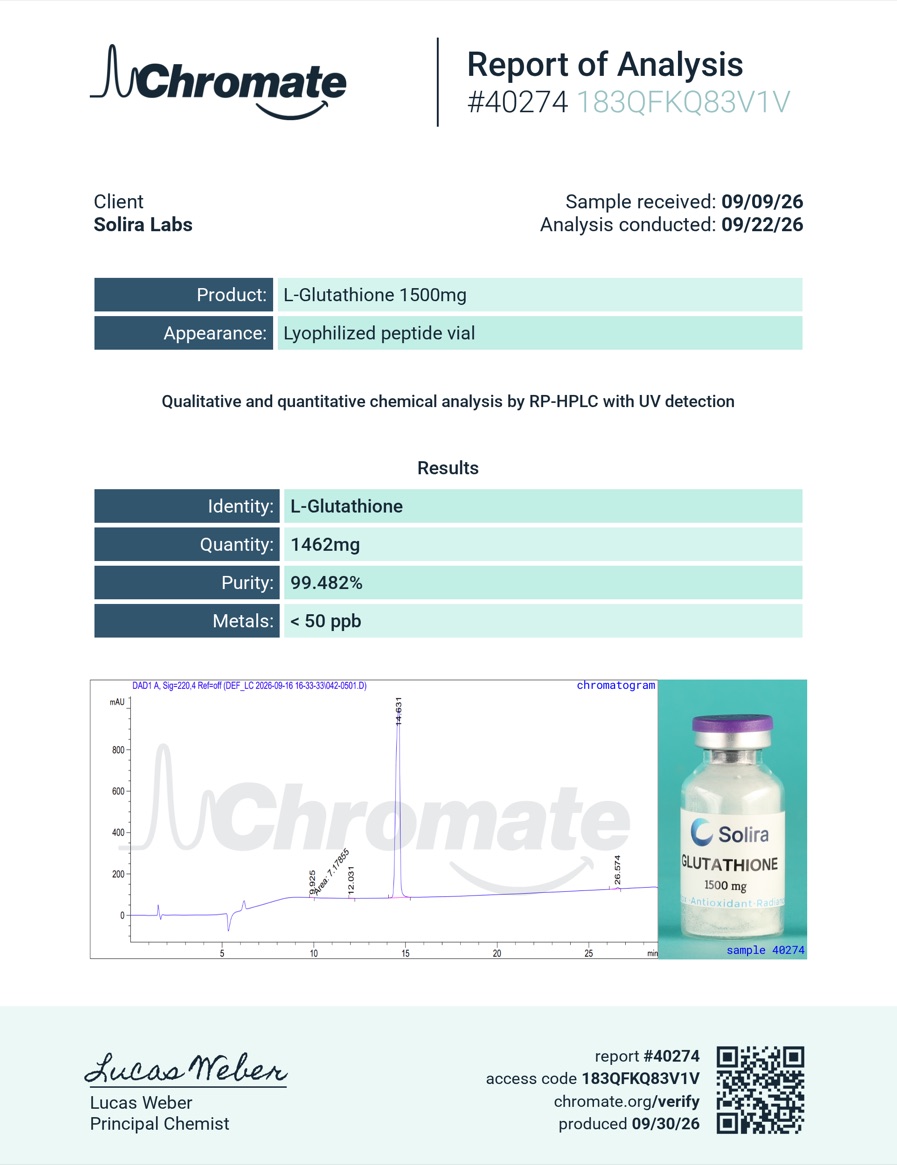
HPLC separates a peptide sample into its component molecules based on chemical behavior. The resulting chromatogram quantifies the target compound against all other detectable species, producing the purity percentage that appears on the COA. Each lot is independently HPLC-verified, and its measured purity is documented on its Certificate of Analysis.
-
2
Mass Spectrometry (MS)
Mass spectrometry confirms the molecular identity and weight of the compound. Where HPLC answers "how pure is this?", MS answers "is this actually the compound it claims to be?". The two methods together rule out both impurity and misidentification — a peptide can be high-purity but the wrong sequence; MS catches that.
-
3
Lot-Specific Documentation
Every manufactured batch is assigned a unique lot number that links the physical vial to its specific test record. The COA references this lot number, the test date, the testing facility, the method used, and the resulting purity percentage. Researchers can match the lot stamped on the vial to the lot on the COA — single source of truth, no batch generalizations.
What's on a Solira Certificate of Analysis
Every COA Solira issues includes the following fields:
- Compound name and structural identifiers (molecular formula, molecular weight, CAS number where applicable)
- Lot number (matches the number stamped on the vial)
- Manufacturing date and testing date
- Testing facility name and accreditation status
- Test method (HPLC + MS, with column / detector specifications)
- Purity percentage (the headline figure)
- Identity confirmation result
- Physical form (lyophilized powder), appearance, solubility notes
- Storage recommendations
- “Research use only” regulatory disclosure
Why Lot-Specific Beats Batch-Wide Testing
A common shortcut in this industry is to test one batch and apply that COA to every subsequent manufacturing run for months. This is cheaper for the supplier but it breaks the chain of evidence: researchers receive a vial from manufacturing run N+5 with a COA from run N. If anything in the synthesis process drifted, the COA no longer reflects what's in the vial.
Solira's approach: every lot gets its own test pass and its own COA. Where a lot report is published, it is linked from the product page and every figure on it is independently verifiable at the laboratory that ran the test — so the result can be checked rather than taken on trust.
Where to Find COAs
Every Solira product page includes a COA tab in the product information section. Where a third-party report is published, it appears there with a link to the testing laboratory's own verification page — open it to confirm the document directly at the lab. Researchers should check the lot number on the COA against the lot number stamped on their received vial. If they don't match, contact support — we will issue the correct COA or replace the lot.
Verified Reports
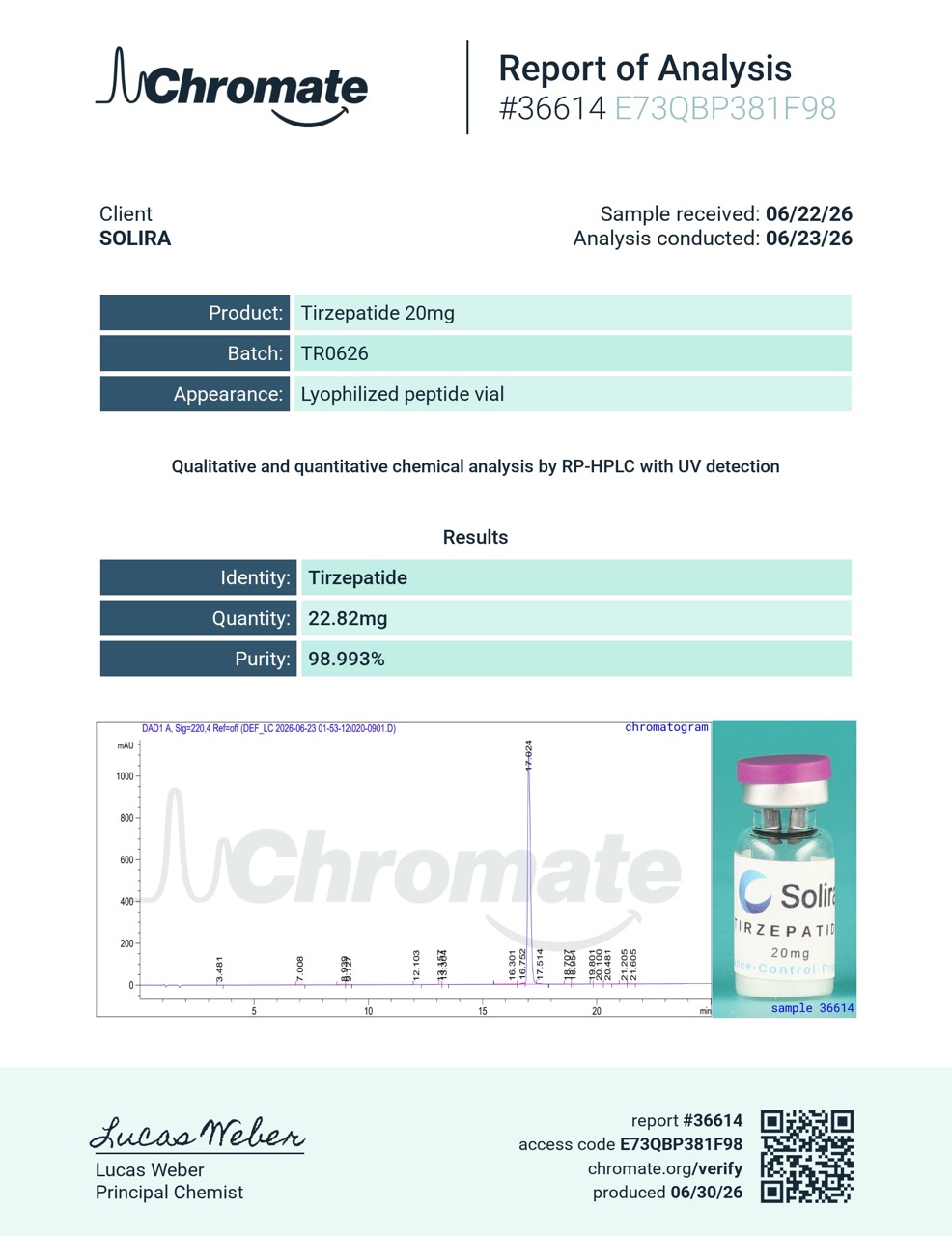
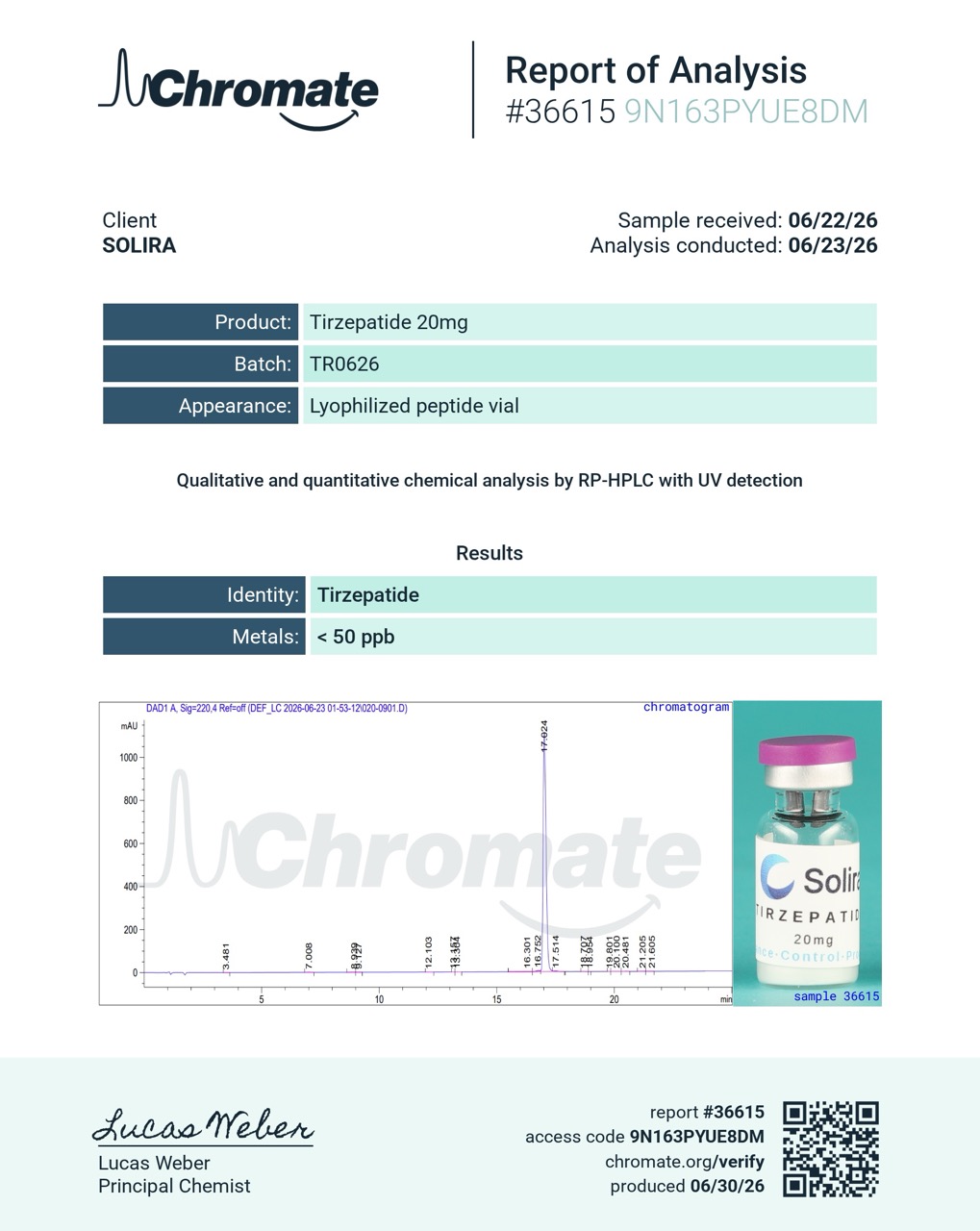
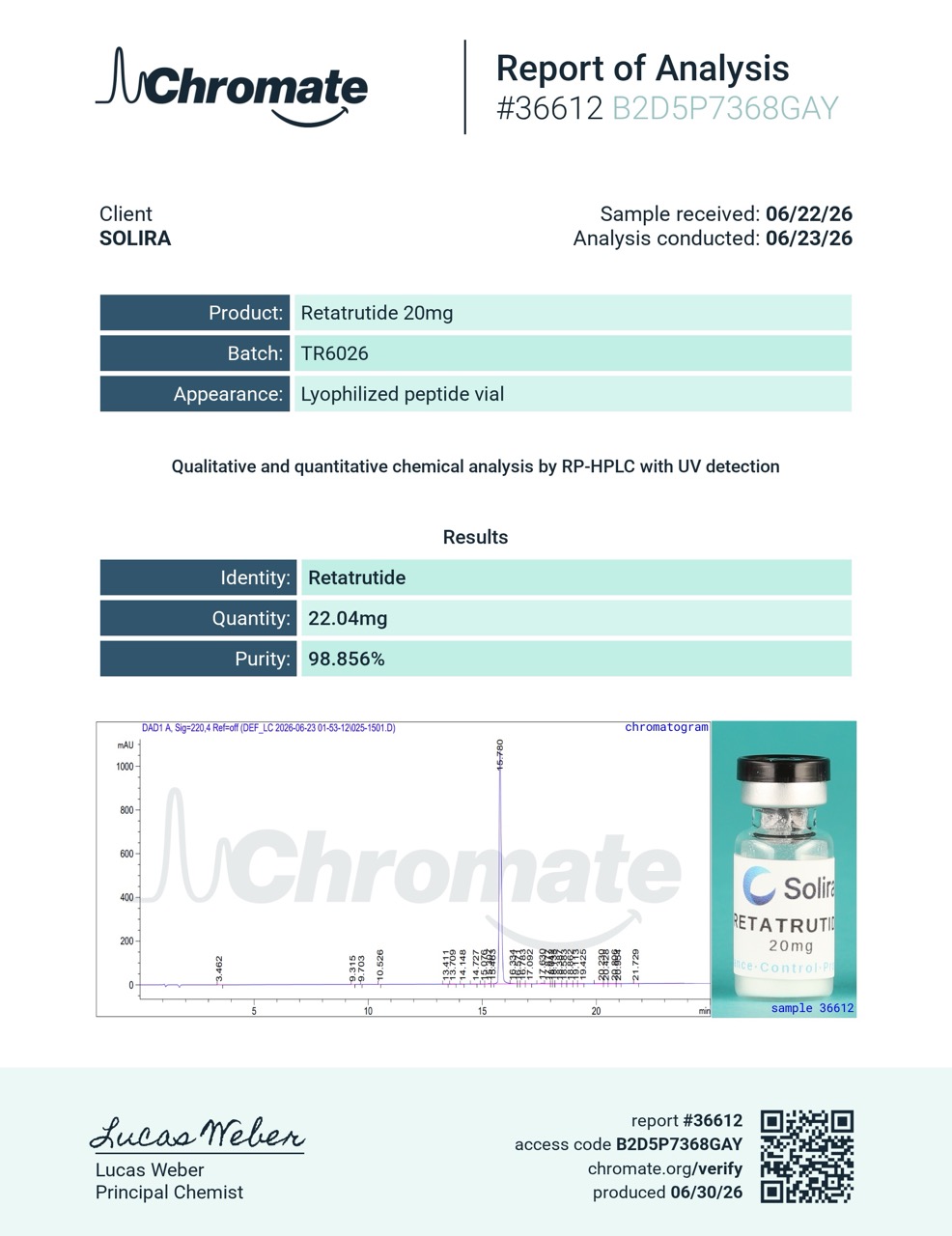
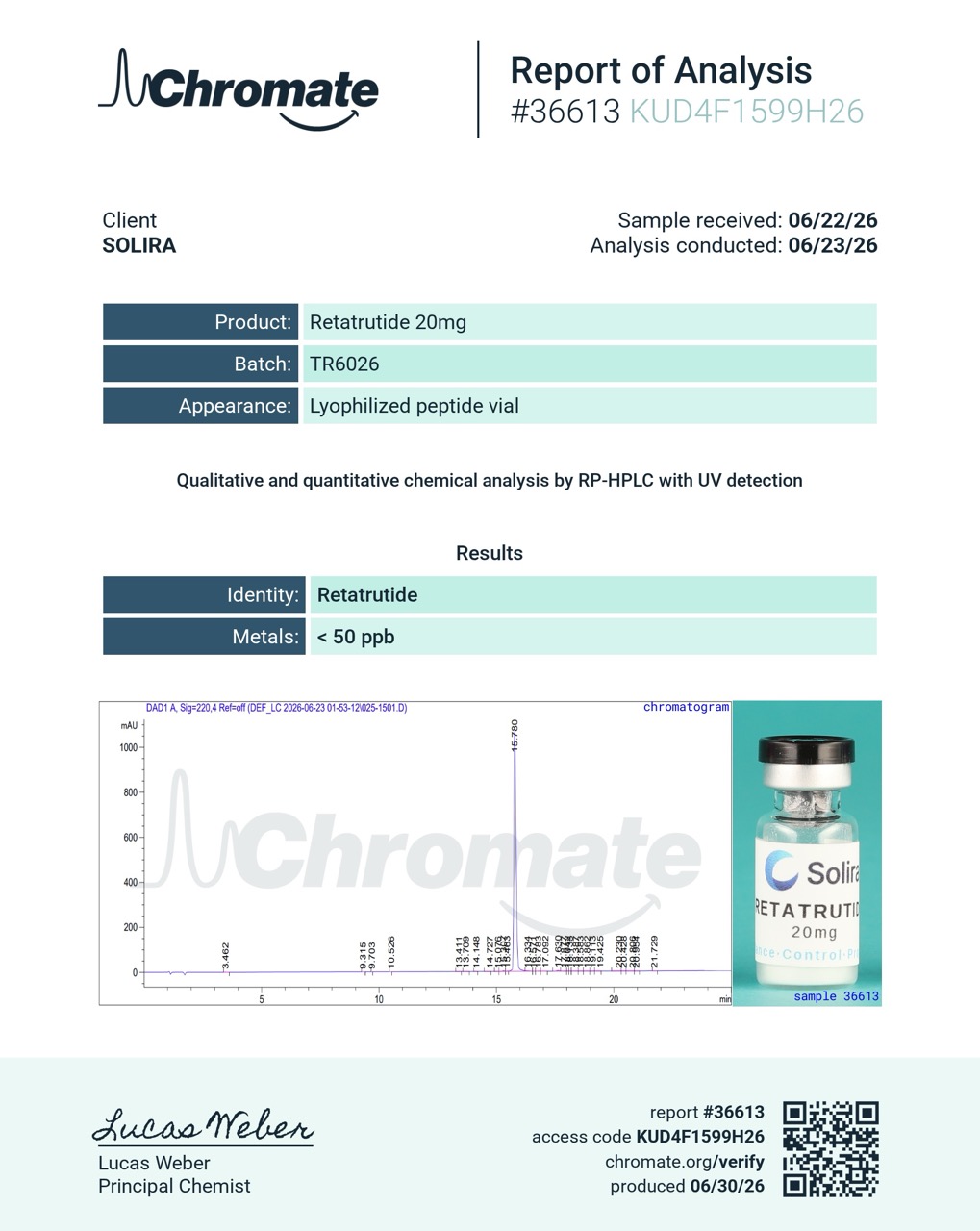
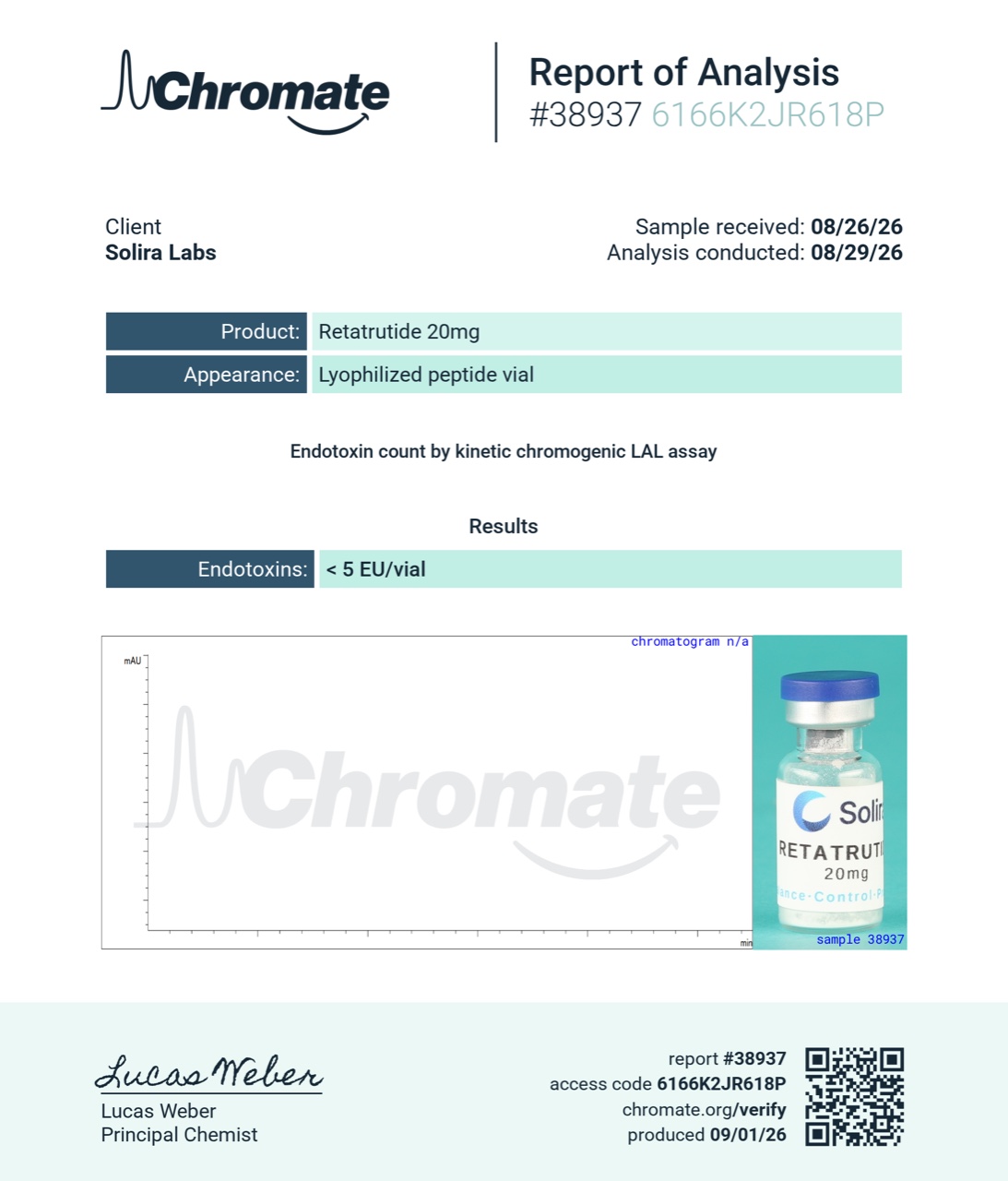
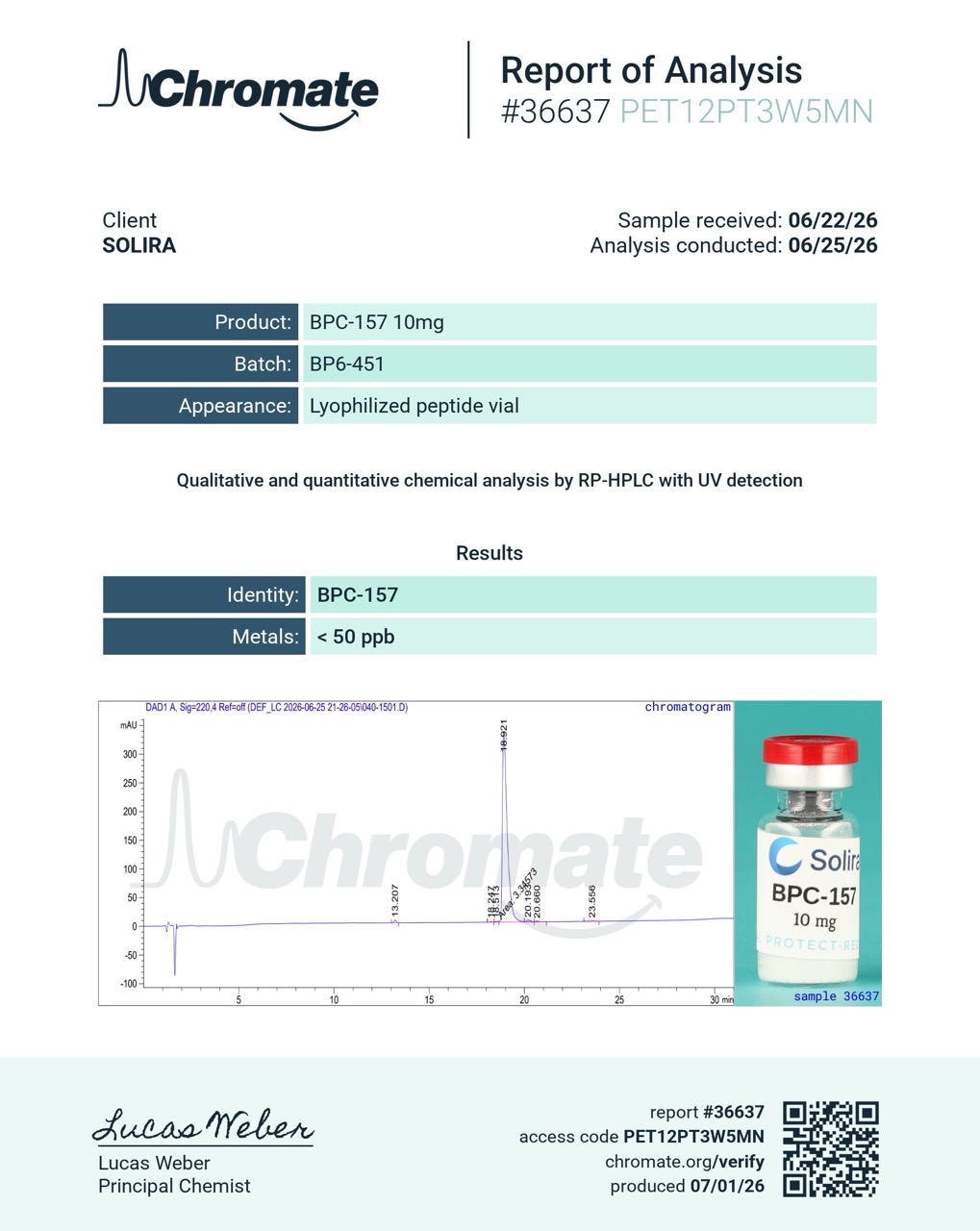
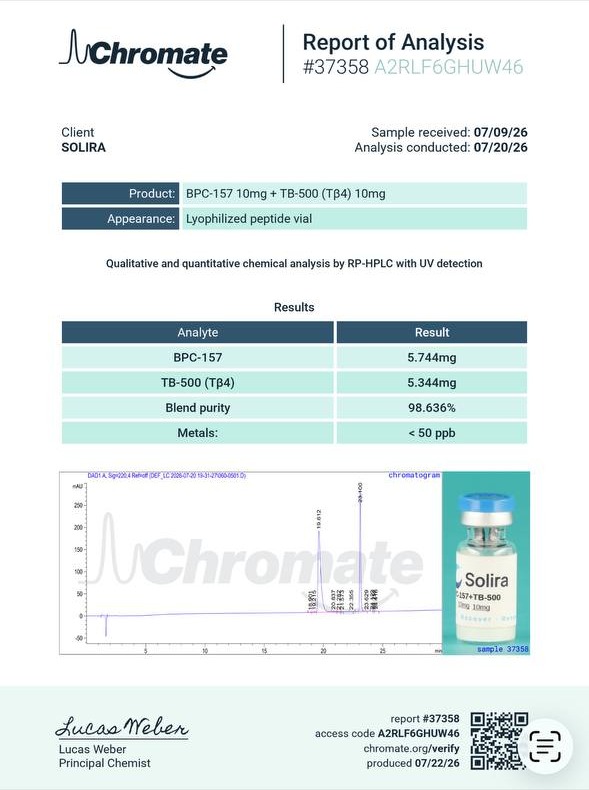
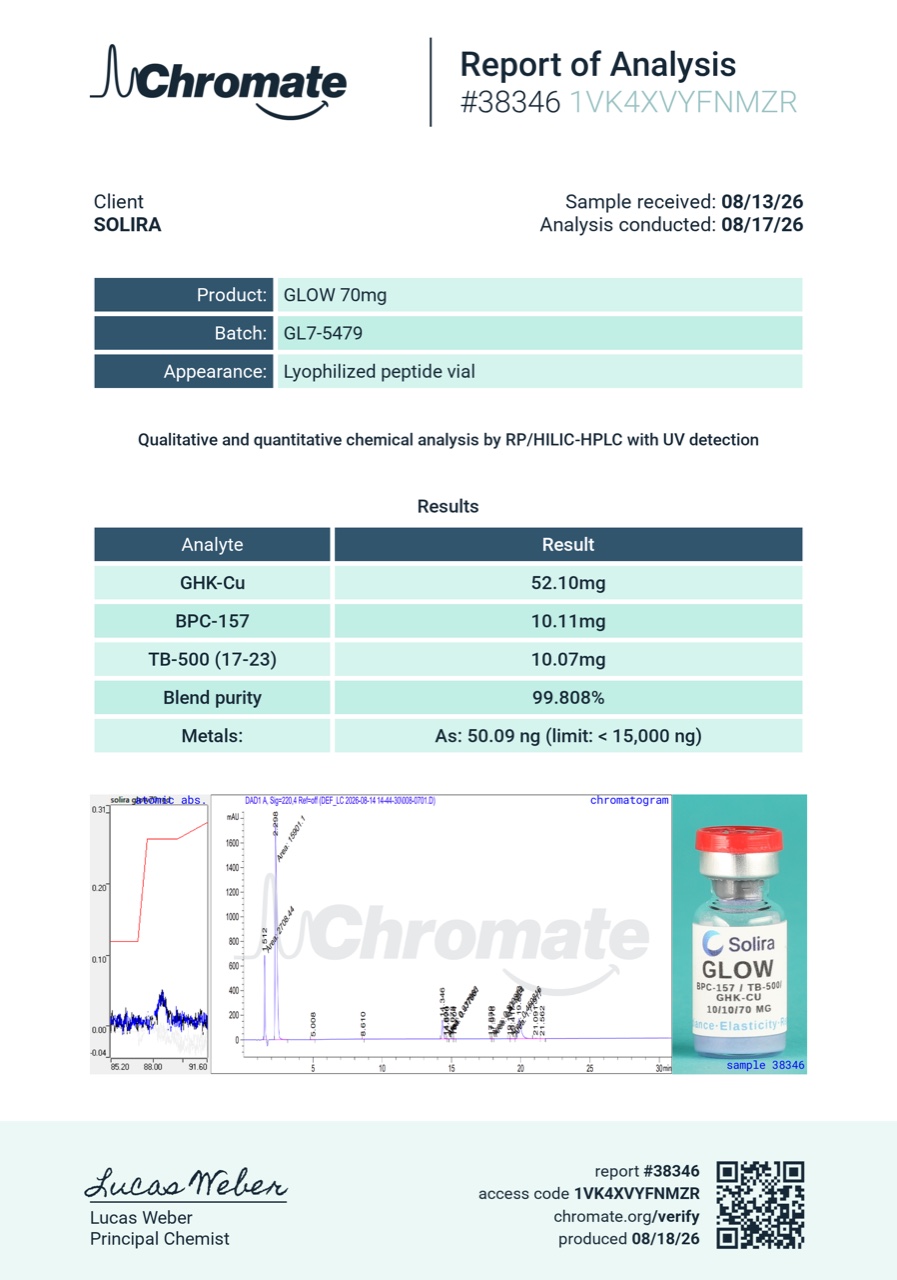
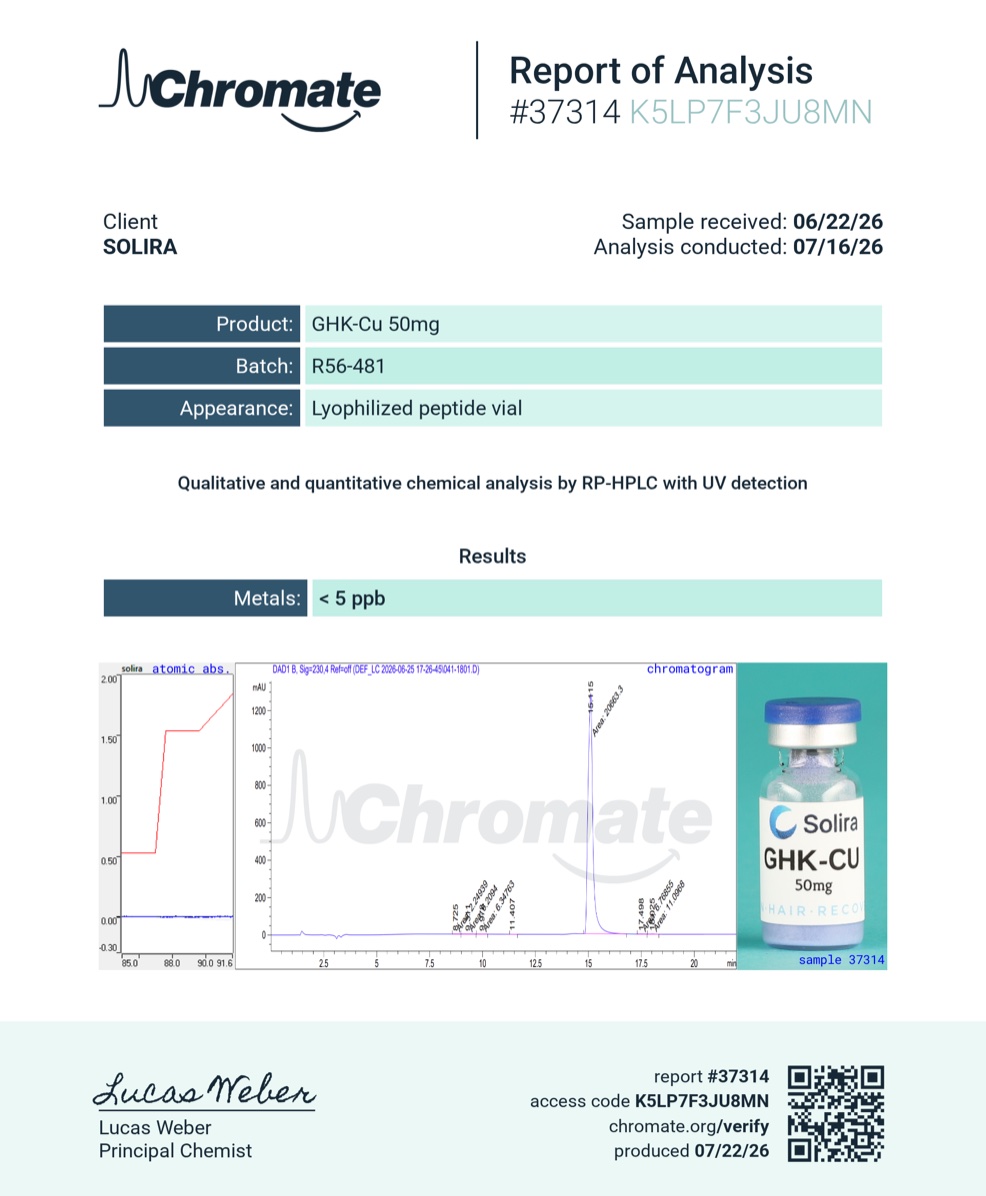
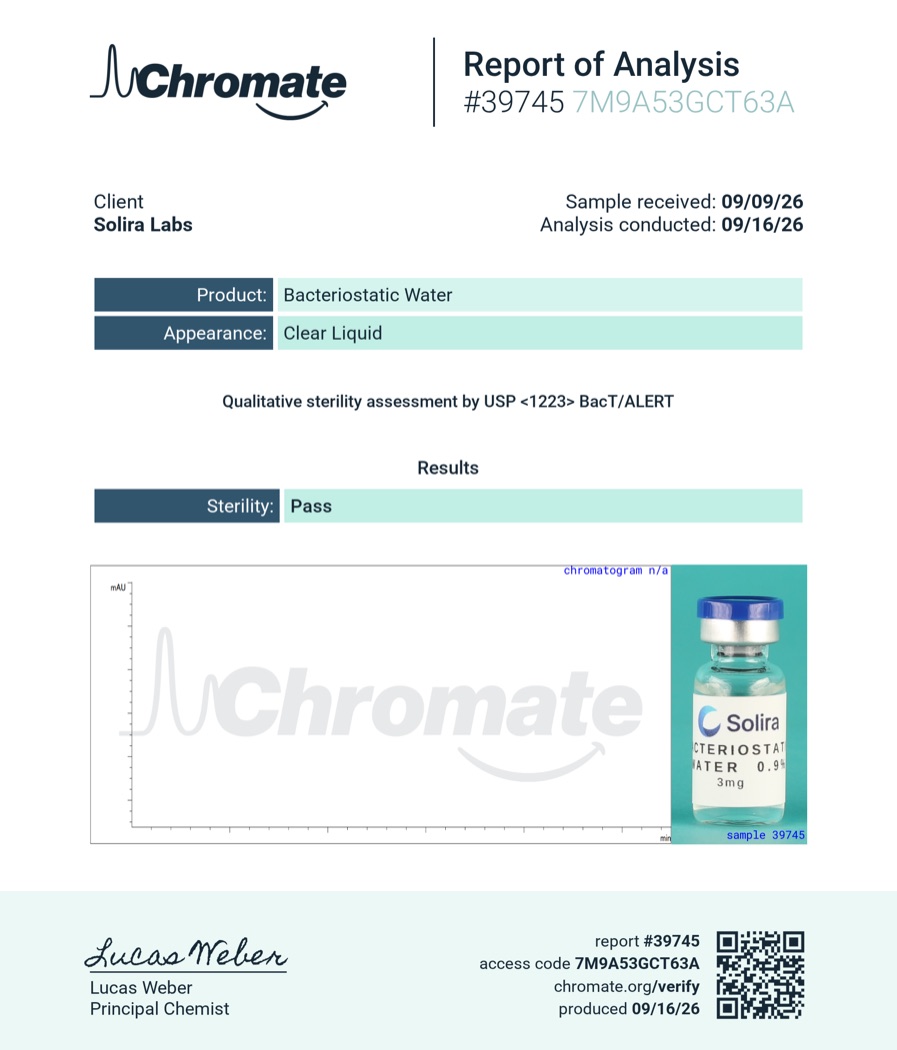
A selection of current third-party lab reports. Each links to the testing laboratory's own verification page — open it to confirm the document directly at the lab, unaltered.
Frequently Asked Questions
How is research peptide purity measured by HPLC?
HPLC measures purity by separating the target compound from all other detectable species. The purity percentage is the share of detectable molecules that match the target peptide; the remainder is byproducts of synthesis or trace solvents. Each lot's measured purity is documented on its Certificate of Analysis.
What is a Certificate of Analysis (COA) for peptides?
A document issued by the testing laboratory that records lot number, manufacturing and test dates, method, purity percentage, and identity confirmation. It is the formal record linking a specific vial of compound to its measured quality data.
Why does it matter that COAs are lot-specific?
Different manufacturing runs can produce different purity outcomes. A lot-specific COA documents the exact run that produced the vial you received. Batch-wide or generic COAs cannot guarantee that the sample matches the document.
What is mass spectrometry used for in peptide testing?
Mass spectrometry confirms the molecular identity and weight of a compound, ruling out misidentification. HPLC says how pure, MS says what it is. Both are needed; either alone is insufficient.
How can a researcher verify their received vial matches the COA?
Match the lot number stamped on the vial label against the lot number printed on the COA. They must be identical. If they don't match, the COA does not apply to the sample in hand.
What is the difference between in-house and third-party purity testing?
In-house testing is performed by the supplier, which creates a conflict of interest — the same party that profits from the sale verifies its quality. Third-party testing is performed by an independent laboratory with no commercial stake in the outcome. Solira uses third-party laboratories exclusively.
Where can researchers download Solira's COAs?
Published reports cover a selection of compounds: they appear in the COA tab of those product pages and in the gallery on this page. Every lot is tested and its report kept on file. If the report for a compound, or for a previously shipped lot, is not published yet, contact support with the lot number and we will send it.
Why is HPLC the standard purity test for research peptides?
HPLC offers high resolution at the molecular level, robust quantification, and reproducible results across laboratories. It is the published reference method in peer-reviewed peptide synthesis literature. Alternative methods (UV, gel) lack the precision required for exact purity quantification.
How long do lyophilized research peptides remain stable in proper storage?
Lyophilized (freeze-dried) peptides stored at −20°C in a sealed dark container retain documented stability for 24 months or longer per manufacturer guidance. Once reconstituted in solution, stability is significantly reduced and depends on the specific compound.
Are research peptides legal to purchase in the United States?
Compounds sold for in-vitro laboratory research only — not for human or animal use — are legally available for purchase by researchers in the United States. Solira does not advise on regulatory matters; researchers are responsible for compliance with applicable institutional and federal guidelines.


